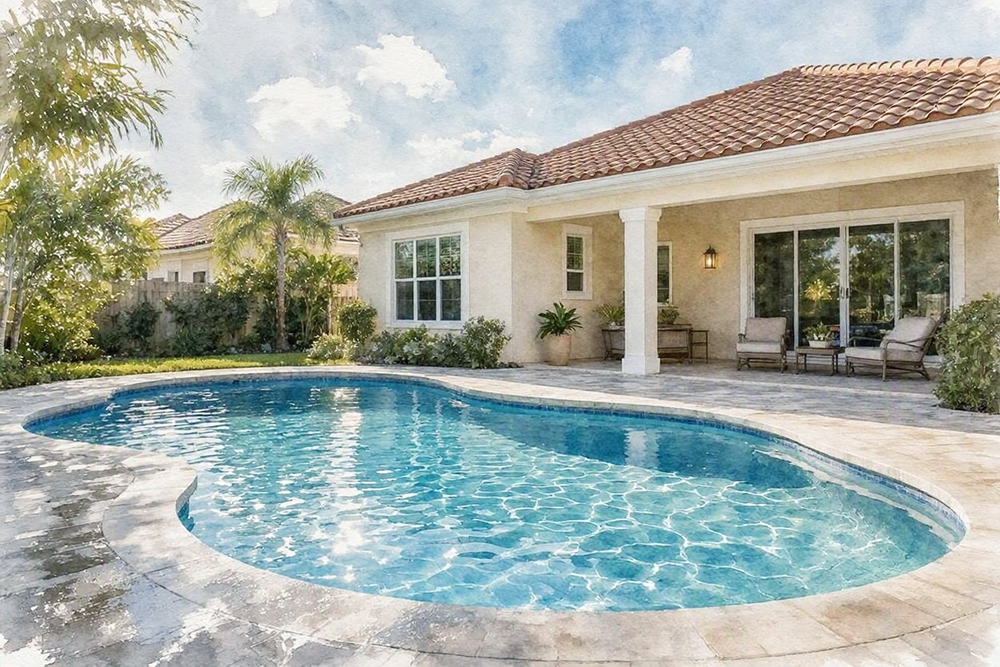
A backyard pool can feel like a private vacation spot, and in warm climates it’s often near the top of buyers’ wish lists. But a pool is also one of the biggest ongoing responsibilities a homeowner can take on. Whether you’re buying a home with a pool, thinking about adding one, or getting ready to sell, it helps to know what comes with the territory before you dive in.
The first thing to plan for is upkeep. A pool needs regular attention all year, not just in summer: testing and balancing the water chemistry, cleaning the skimmer baskets and filters, brushing the walls, and keeping debris out. Behind the scenes, the pump, filter, heater and other equipment run for hours every day. That shows up on your electric bill and means parts will eventually wear out. Many owners handle the weekly chores themselves and call a professional for bigger jobs. Others hire a pool service from the start. Either way, budget for chemicals, routine service, and periodic repairs or resurfacing as the pool ages.
Safety and insurance come next. Most local codes require some combination of fencing, self-latching gates, door alarms or safety covers, especially in homes with young children or pets. Check the rules in your area, because they can affect a sale as well as your day-to-day use. A pool also adds liability, so talk with your insurance agent about whether your coverage limits are high enough. Many homeowners also add an umbrella policy for extra protection.
Finally, think about how a pool fits into your long-term plans. Whether a pool adds value depends heavily on your market, the condition of the pool, and what buyers in your area expect. A well-kept pool can be a selling point, while an aging one can give buyers pause. If you’re buying, ask for a separate pool inspection and find out how old the pump, filter and heater are. If you’re selling, have the paperwork and maintenance records ready. In either case, look into pool and spa coverage as an add-on to a home warranty. It can help cover the cost of repairing or replacing pool equipment that breaks down, so you can spend more time enjoying the water and less time worrying about the next repair bill.